


Services
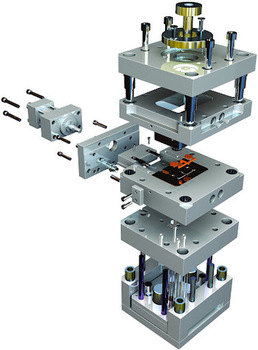 Every high-quality plastic molded part starts with a well-designed tool. The accuracy of that tool affects how each plastic component fits, functions, and performs throughout production.
At Bankier Companies, we specialize in precision tooling and custom injection mold design, helping manufacturers achieve consistent results through carefully engineered molds. Our experience as both tooling manufacturers and end-users gives us a valuable understanding of what makes a mold perform reliably.
We combine advanced engineering with precision CNC machining to create tooling that meets your part specifications while supporting efficient, repeatable production.
Discuss Your Precision Tooling Project
Precision tooling is the process of designing and manufacturing accurate molds and related tools used to produce consistent, high-quality parts. In plastic injection molding, these tools control the shape, dimensions, and surface finish of each molded part.
An injection mold typically contains two primary sections: a core and a cavity. Together, they form the shape of the finished part. Additional features control how molten plastic enters the mold, cools, and releases once the part has hardened.
Even small differences in mold design can affect the final product. Poor material flow, uneven cooling, or inaccurate dimensions may lead to defects and production delays.
At Bankier Companies, we draw on our expertise in precision mold building and plastic processing to address challenges early and develop tooling that meets your production goals.
Successful injection molding starts with tooling designed for your part's specifications. At Bankier Companies, we combine mold engineering with advanced manufacturing technology to create accurate tooling solutions and reliable tools.
A precision mold must do more than create the right shape. It must control how plastic flows, cools, and releases to ensure consistent results.
At Bankier Companies, we use advanced computer-aided design and manufacturing (CAD/CAM) software to engineer custom molds. This technology helps us plan complex features and identify potential manufacturing challenges before construction.
By considering material behavior and part requirements early, we can improve product quality and reduce costly adjustments during production.
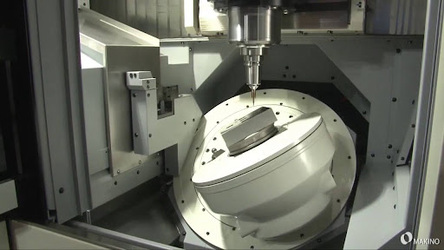 Once we finalize the design, our team uses high-speed, multi-axis CNC machinery to manufacture precise injection mold components.
This computer-controlled technology produces intricate shapes and detailed features with accurate dimensions, including designs that would be difficult to achieve through conventional machining.
Uneven material flow or cooling can cause defects that affect a plastic part's appearance, dimensions, and performance.
Bankier Companies uses advanced simulation technology to identify these issues during mold design.
Together, these tools help us refine mold designs before potential problems lead to costly production changes.
Precision tooling also shapes a plastic part's final appearance. Bankier Companies offers in-house mold texturing, laser engraving, and laser welding to meet specialized tooling requirements.
These in-house capabilities help us maintain quality and consistency throughout mold manufacturing.
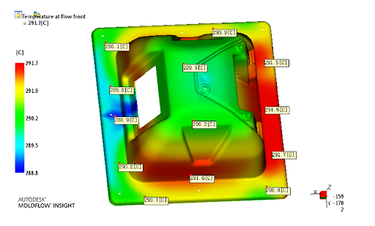
Designing an effective injection mold requires understanding how plastic behaves throughout the molding process. Bankier Companies uses advanced simulation technology to evaluate material flow and cooling conditions before manufacturing begins.
While both methods help improve mold design, they focus on different aspects of production.
| Flow Analysis | Cooling Simulation | |
|---|---|---|
| Primary Focus | How molten plastic fills the mold cavity | How heat moves through the mold during cooling |
| What It Evaluates | Material flow, filling patterns, and pressure | Temperature distribution, cooling rates, and heat transfer |
| Problems It Helps Identify | Incomplete filling, air traps, and flow-related defects | Uneven cooling, warping risks, and inefficient cooling cycles |
| Design Improvements | Helps optimize gate placement and material flow | Helps optimize cooling channels and temperature control |
| Production Benefits | Supports consistent filling and improved part quality | Supports dimensional stability and efficient cycle times |
By evaluating both material flow and cooling conditions, Bankier Companies can identify potential issues early and refine mold designs to support consistent, high-quality plastic components.
Developing a high-performance mold takes careful planning and coordination between design and manufacturing. At Bankier Companies, we approach precision tooling with the finished part and its production requirements in mind. While each project is different, our process generally follows four stages.
We begin by understanding your component's design, intended application, and manufacturing goals. Our team reviews important factors such as part geometry, material selection, dimensional tolerances, and expected production volume.
These details help us determine how the mold should be designed to support consistent results.
Next, we develop the tooling design using advanced CAD/CAM technology.
During this stage, we evaluate how plastic will flow through the mold and how cooling conditions may affect the finished part. Simulation tools help identify opportunities to improve the design before manufacturing begins.
With the design established, we use CNC machining to manufacture the injection mold components.
Our team focuses on dimensional accuracy and proper fit throughout construction. We also apply the necessary finishing techniques to achieve the required surface details and tooling features.
Once the tooling is built, it must support the part's requirements under production conditions.
Our experience with injection molding helps us evaluate how tooling design decisions affect material flow, cooling, and repeatability. We can refine tooling details as needed to support a smoother transition into production.
Precision tooling and plastic injection molding are closely connected, but they serve different roles in manufacturing.
Precision tooling creates the mold. Injection molding uses that mold to manufacture plastic parts.
During injection molding, molten plastic enters the mold cavity under pressure. Once the plastic cools and hardens, the mold opens and ejects the finished part. The mold must repeat this process while maintaining the part's required dimensions and appearance.
Well-designed tooling can improve production in several important ways.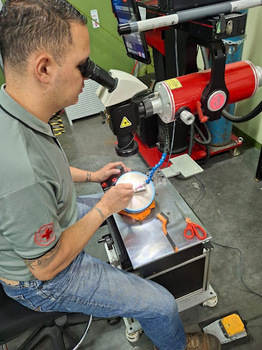
Accurate mold dimensions and controlled material flow help manufacturers produce repeatable parts. This is especially important when components must fit together or meet detailed specifications.
Mold design affects common defects such as warping, sink marks, and incomplete filling. Evaluating these risks during tooling development can reduce the need for rework and adjustments.
Cooling is a major part of the injection molding process. Properly designed cooling systems can help reduce unnecessary cycle time while supporting consistent part quality.
Precision tooling requires an upfront investment, but a well-designed mold can reduce waste, limit production interruptions, and support dependable manufacturing over time.
At Bankier Companies, our plastic injection molding services complement our precision tooling capabilities. By considering both stages together, we help customers develop practical manufacturing solutions for their plastic components.
At Bankier Companies, we bring decades of experience in plastic processing and mold manufacturing to every project. As both toolmakers and mold users, we understand how tooling decisions affect part quality and production performance.
Our hands-on experience with injection molding helps us anticipate production challenges and design tools that support consistent, reliable results.
We combine CAD/CAM software, multi-axis CNC machining, and simulation technology to create precise molds and identify potential issues before production.
Our in-house mold construction, texturing, engraving, and welding services simplify coordination and help maintain quality throughout the tooling process.
Bankier Companies also offers product development and value engineering, injection molding, and assembly. These services allow us to support your project beyond mold manufacturing, with the entire production process in mind.
Precision tooling involves designing and building the mold used to create a plastic part. Injection molding uses molten plastic to fill the mold and create the finished part. Both stages work together to achieve consistent results.
Mold design controls how plastic fills, cools, and releases inside the tool. Details such as gate placement, cooling channels, and cavity dimensions can influence part accuracy and surface quality. A well-designed mold helps reduce defects and supports repeatable production.
Mold-flow analysis uses simulation software to study how molten plastic moves through an injection mold. Engineers use these insights to identify potential filling problems, evaluate mold features, and improve the design before manufacturing begins.
Tooling costs depend on several factors, including part complexity, mold material, required tolerances, production volume, and the number of mold features. More intricate components may require additional machining or specialized tooling designs. Bankier Companies can review your project requirements to help determine an appropriate approach.
Quality plastic parts start with precision tooling. At Bankier Companies, we combine expert mold design, advanced machining, and hands-on injection molding experience to manufacture precision molds that meet your production needs.
Our team can help you develop tooling for a new product or evaluate the requirements of an existing design. We'll work with you to find an approach that supports part quality, production efficiency, and long-term value.
